Table
Would you ever eat a cricket?
Ants in Mexico City, mealworms on a waffle in New York,
and the bee paradox.
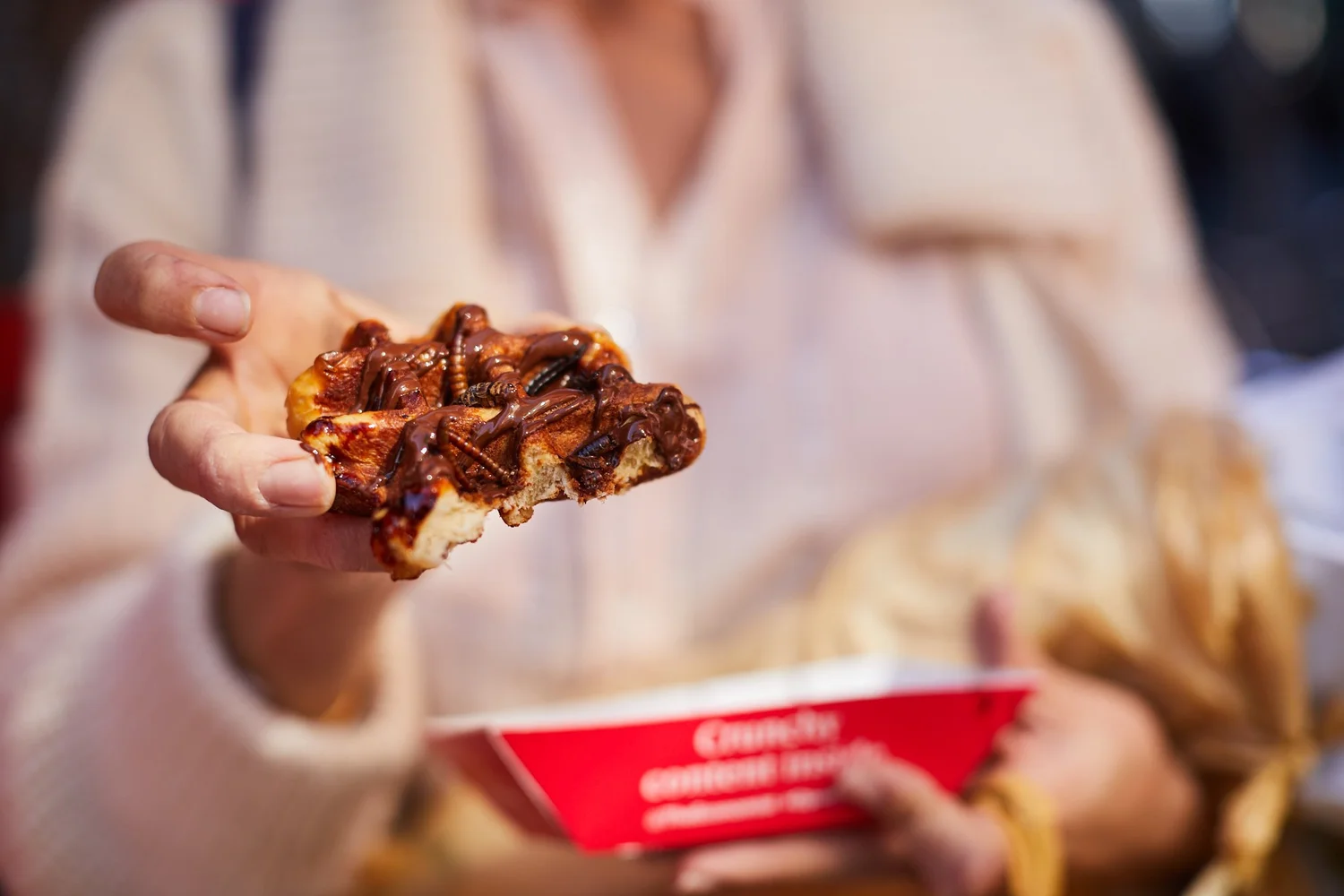
Would you ever eat a cricket? It's interesting how that question can raise a lot of emotions. I never thought I'd be someone who would actually eat a cricket or an ant. And yet I've done both.
The story kind of starts with Enrique Olvera, who had been on Netflix's Chef's Table. He had a great restaurant in New York called Cosme, and his flagship, Pujol, in Mexico City. It felt like a moment to go taste his food. (Here are my Travel Notes from Mexico.)
The chicatana
I remember the story about the chicatana ant. Chicatanas are big leaf-cutter ants, gathered once a year in late spring, the morning after the first heavy rain. They're a delicacy. At Pujol, they toast them and fold them into a mayonnaise for baby corn, and it's absolutely delicious. Kind of tangy, and I understand why he uses them. It was really good, and it made me think about what other insects we eat.
It started with fried worms
If I'm honest, my first introduction to this wasn't a restaurant but a children's book: How to Eat Fried Worms. A boy takes a bet to eat 15 worms in 15 days. I remember him smothering them in mustard or ketchup or whatnot. I don't remember if he won the bet, but I remember being completely grossed out, and also a little curious. It planted a very early idea of what "gross" is: mostly a story we tell ourselves.
A waffle truck in New York

Fast forward to 2018. I'm in New York City and I walk by The Economist's waffle truck, a partnership with Wafels & Dinges handing out warm waffles with Nutella and roasted mealworms (and a few crickets), raising awareness that insects are part of the diet of around two billion people. It's mostly us in the West who find it strange. They're protein, really good protein, and they need less land, water and feed than the animals we usually eat. I have a huge issue with the agricultural practices around beef, chicken and farmed fish. So it's thought-provoking: why don't we eat more insects?
I'd actually tested baking with them. My first real hands-on time was at the Natural Gourmet Institute, in a baking class. I think we made little muffins with cricket flour and zucchini, and cricket flour cookies too. Unfortunately, while they were baking, the kitchen smelled a little like burnt flesh. Then we tasted them, and they tasted like nothing, just whatever we'd made the muffin to be. All that protein, and you'd never know it was in there.
“The difference is just the story we've been told.”
The bee paradox
Here's what I can't stop thinking about. We happily eat honey. We pay money for bee pollen and royal jelly and call them superfoods. But offer the same person a cricket or a mealworm and they recoil. Yet it's all from insects. The difference is just the story we've been told.
I picked up a gorgeous book, On Eating Insects (Phaidon), and there's a whole chapter on bee bread: pollen that bees pack into the comb with nectar and their own digestive fluids, where lactic acid bacteria ferment it. That fermentation makes the nutrients easier for the body to take up, and some of the microbes are the same kinds we find in our own fermented foods. The authors' favorite part: we're not the only ones who ferment our food. Bees probably got there first.
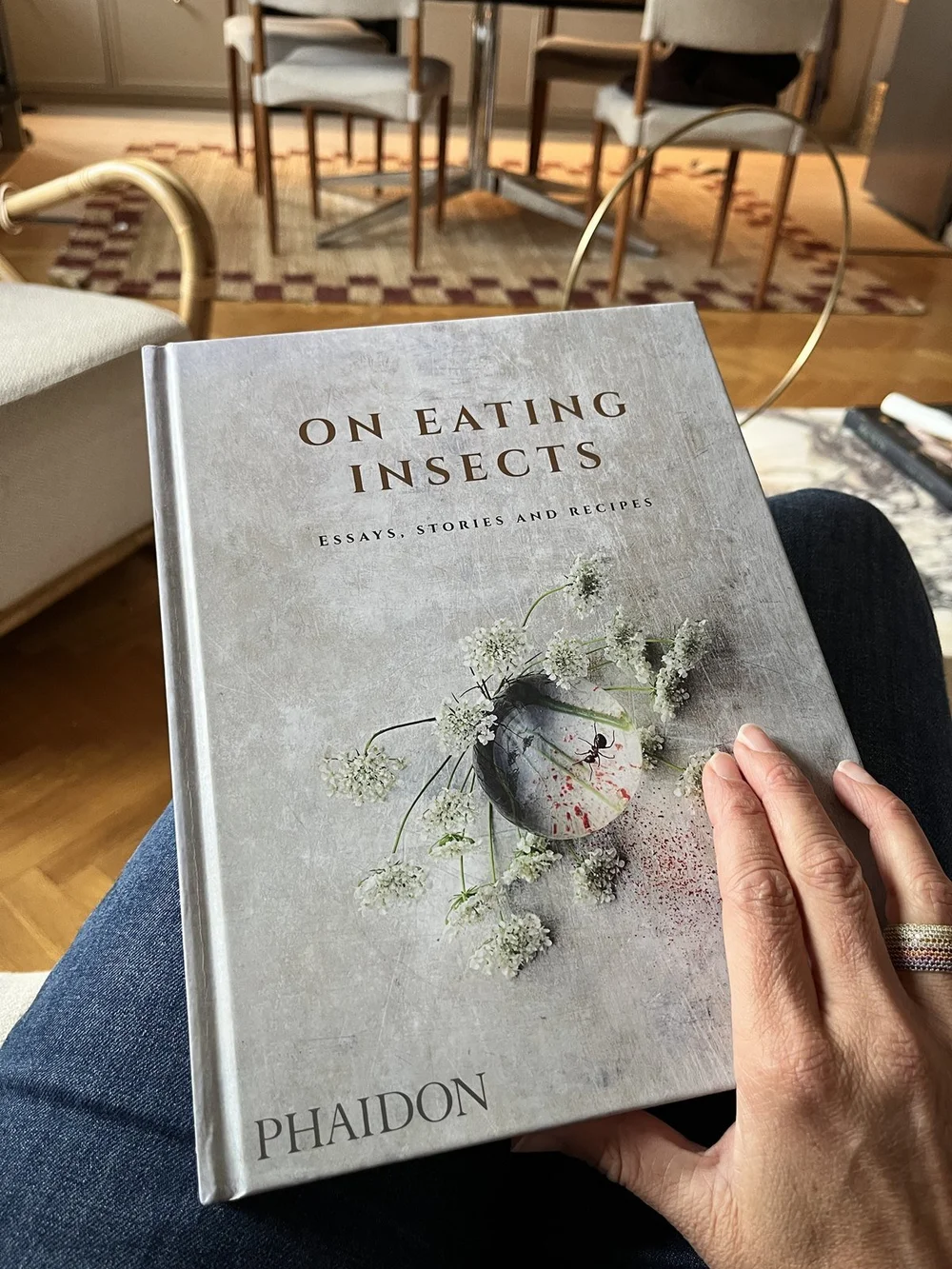
As a nutritionist who works with gut health every day, this really stopped me. When we think about fermentation and microbes, it makes me feel like we really are just a collection of bacteria.
And if insects really are one of the most sustainable proteins we have, using a fraction of the land, water and feed, then the question isn't whether they're food. It's how we get past the "ick".
Beautiful changes everything
Flip through On Eating Insects and you forget to be squeamish. A granola glinting in a white bowl. A jewel-red rhubarb jelly scattered with tiny ants. A licorice stick dotted with ants and cherry blossoms, lovingly called the Chimp Stick. Don't you just picture Jane Goodall's chimps fishing for ants? When food is presented that beautifully, we lean in. We taste. We usually love it. It's the same food. Only our expectations changed.
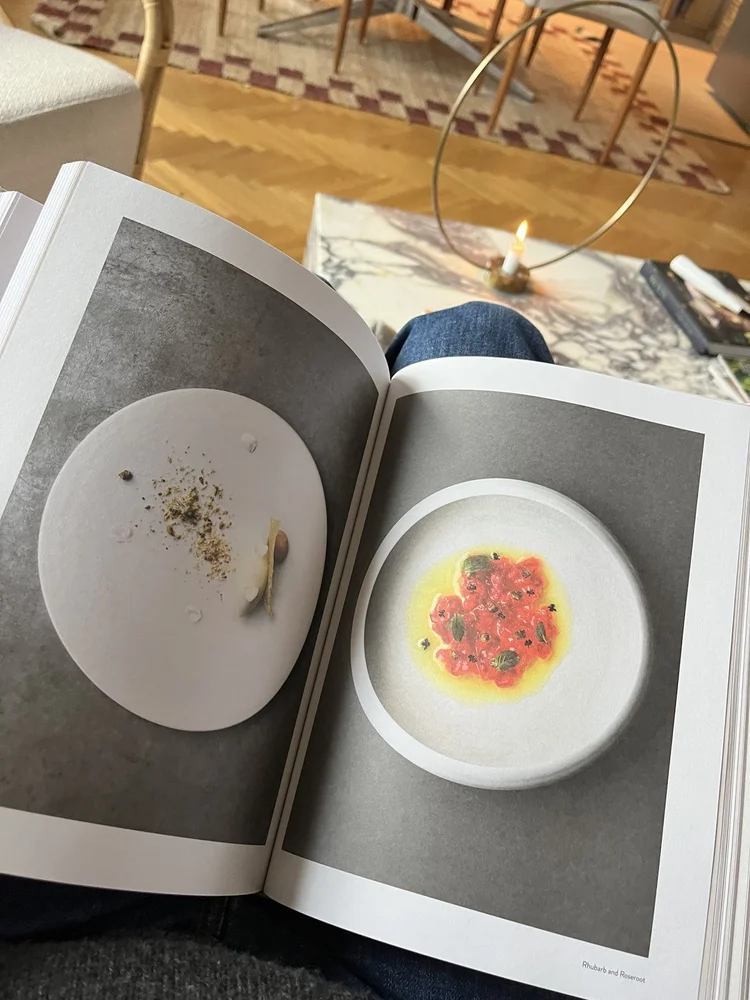
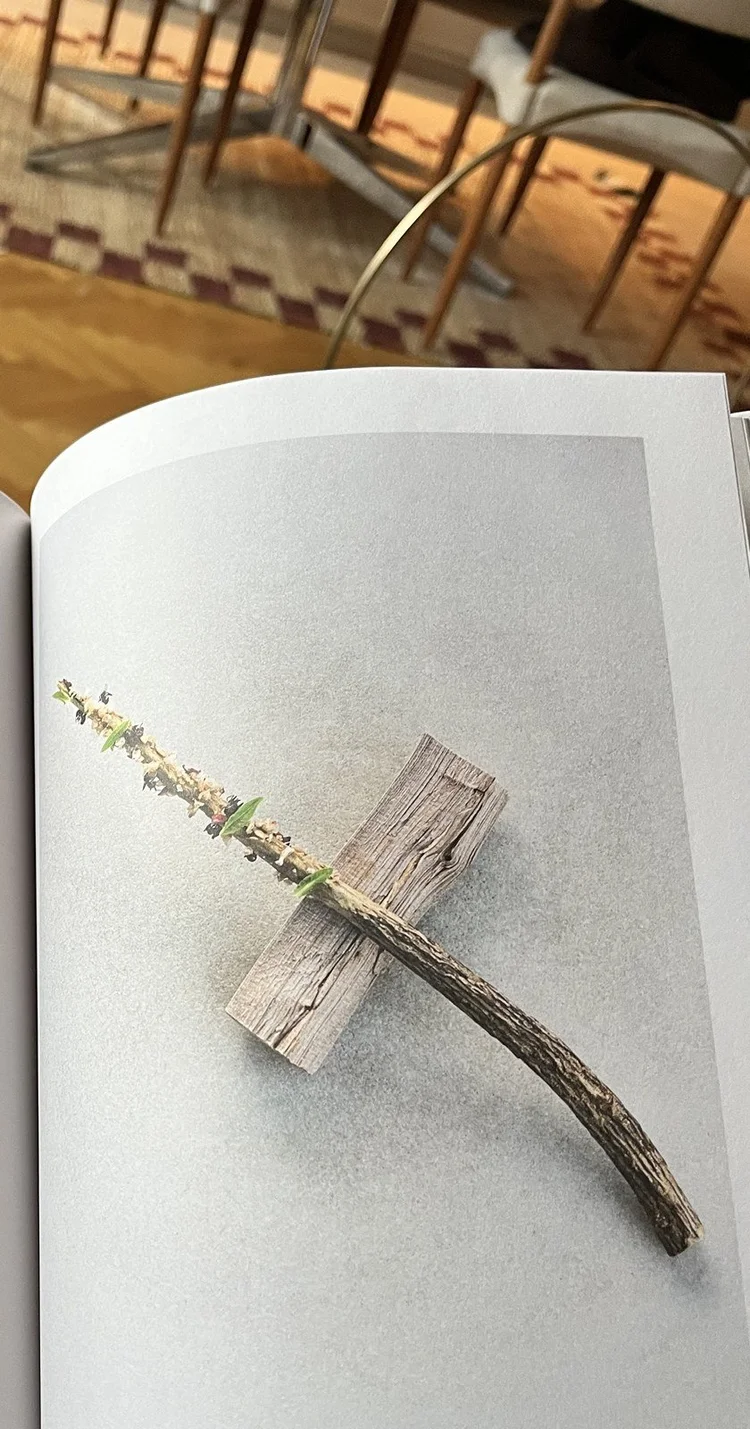

From On Eating Insects (Phaidon), photographed at home.
What I love most is their point that, in many places, insects were never famine food. They were "real delicacies", often prized above other meat. Two dishes I keep coming back to: their Bee Brood Granola, made as a gentle first step because you never see a whole insect, just oats, seeds, honey and a savory depth. And Ants on a Log, a cheeky grown-up take on the 1950s kids' snack of celery, peanut butter and raisins: celeriac logs, a bark crumb, sunflower seed cream and real ants. Find both in the book (pages 220 and 244).
The more curious you are, the bigger your table gets.
More from this trip 💋
Travel Notes: Mexico
Sources: FAO via CIFOR · Bedford + Bowery · On Eating Insects, Nordic Food Lab (Phaidon, 2017)