Mind
Your brain can change.
It just needs practice.
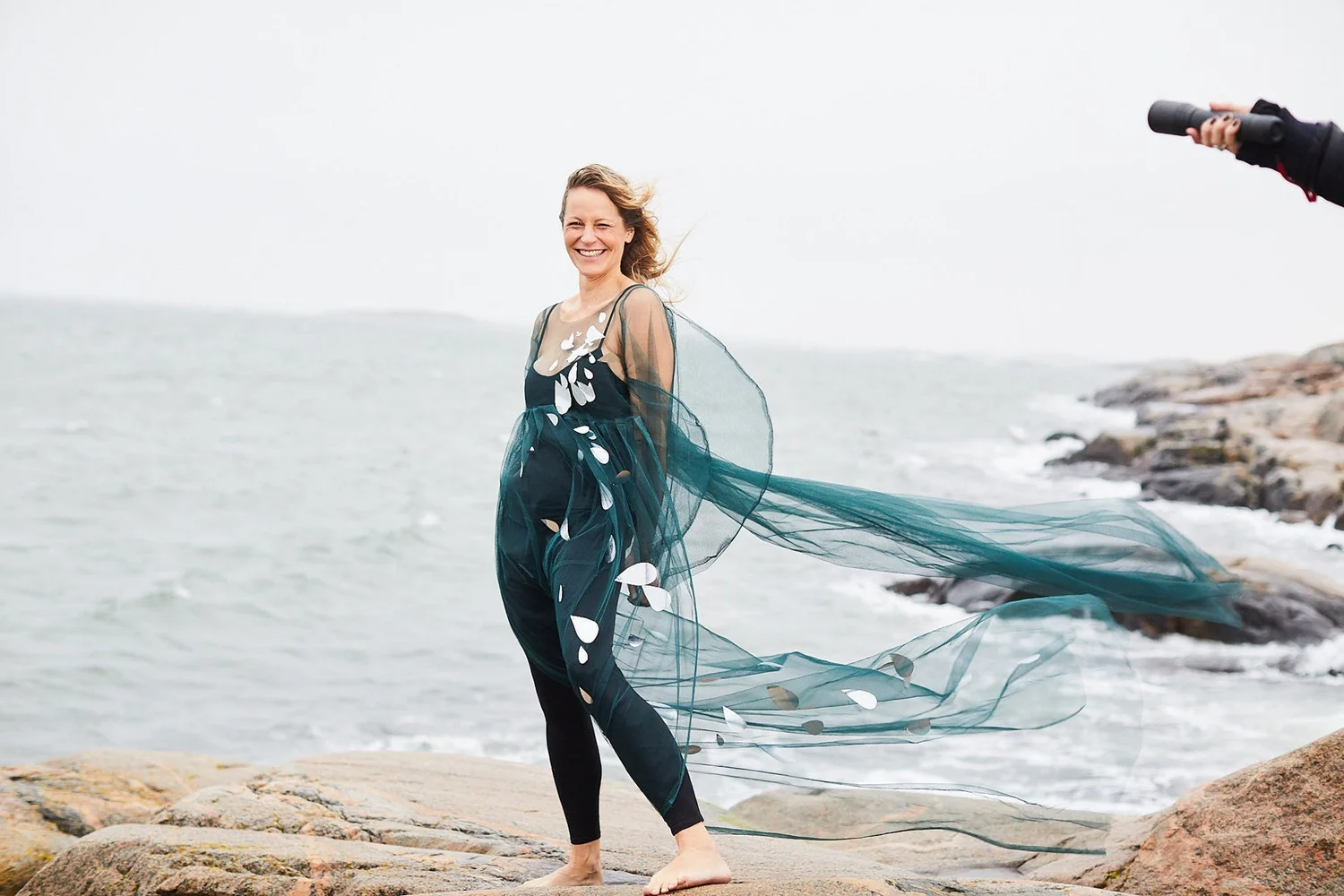
I think I was about 40 when I caught myself doing it again. That downward spiral in my mind that just keeps going and going and going. I start to catastrophize: the one bad thing I think might happen suddenly pushes through 16 different scenarios, in completely different parts of my life. It never helped me in any way. It was just the groove I knew.
I've always joked that my life got napalmed more than once. My mother died when I was 14. I had breast cancer at 27. Both parents were gone by 34. Single at 39, in a new country. Divorced at 40. And every time, the hardest part wasn't the actual event. It was how I had learned to protect myself from feeling it. That's the line from PRACTICES I come back to most: the trauma isn't what hurts us, it's how we adapted.
One of the ways I adapted was to catastrophize. If I thought through every single scenario, I could protect myself from the unexpected. It was about control, not living with what was actually happening. Learning to live with flexibility is part of rewiring the habits and patterns that keep us stuck.
But here's the good news, and there's science behind it.
What fires together, wires together
Your brain is not fixed. Every time you repeat a thought, a reaction or a habit, the pathway behind it gets a little stronger. Neuroscientists call this neuroplasticity. Do something often enough and it becomes automatic. The groove gets deeper, and the brain takes the easy road.
Think of a pristine ski mountain, first thing in the morning. Your first run down, it's a little dodgy. You're a bit scared, and it's not really working. But do it a couple of times and you've got your path. It starts to flow, easily and automatically. You could almost do it blindfolded. That is how our brain works.
That's why insight alone rarely changes anything. You can understand why you reach for the phone, the second glass, the old story, the catastrophizing, and still do it. You can still fall down that rabbit hole, on and on and on.
Awareness is a start.
Repetition is what actually rewires.
The Practice is the mechanism
This is the whole method, really:
- Awareness. Notice the thought. You are not your thoughts; you're the one watching them.
- Choice. In the gap between noticing and reacting, choose something else. Just once.
- Behavior. Do the new thing, even if it feels clumsy.
- Habit. Do it again. And again. That's the rewiring.
Why we start in the body
You can't think your way into a new choice when your nervous system is on fire. That's where movement and breath come in. In class I hold you in a pose that's uncomfortable on purpose, around minute three of the jumping jacks when the voice says I want to quit. You get to watch your go-to reaction in real time, breathe through it, and stay. Then you carry that muscle memory off the mat, into the meeting, the argument, the diagnosis.
Add, don't subtract
It's easier to build a new groove than to fight an old one, so focus on what you add, not what you forbid. That's why there are no don't-eat lists in The Practice. Instead of "stop snacking," it's beans at every meal. Instead of "no sugar," it's eat the rainbow. Abundance, not restriction. A new groove you actually want to walk down.
My stop sign
So how did I stop catastrophizing? I pictured a big red stop sign, and I practiced it. When the thought comes in, I recognize it. I see it. I decide to stop, and up goes the stop sign. Then I reel myself back and start speaking to myself differently: more lovingly, more kindly, more compassionately. This really took some work! I had so internalized my parents' way of speaking and approaching life that I had to practice a whole new self-dialogue.
Why it's called a practice
Nobody gets it right the first time. Some weeks I'm the teacher, and some weeks I'm the student who skipped the practice and definitely felt it. But for the most part, I'm on a healthy, happy track now. And I got here the unglamorous way: by repeating small things until they became me.

Your healing doesn't have to be perfect.
It just has to be practiced.
Try this week
Notice what comes up. When it does, put one hand on your heart and one on your belly. Take three slow, deep breaths in, and ask yourself: what do I actually need right now? Then do that. Once a day for the next week, just noticing. That's the groove starting.